Malangizo Ofunika Achitetezo
Please read these instructions carefully before using your Salter Electric Egg Cooker. Keep this manual for future reference.
- Always ensure the appliance is unplugged from the mains supply before cleaning or when not in use.
- Do not immerse the main unit, power cord, or plug in water or any other liquid.
- Chipangizochi sichinapangidwe kuti chigwiritsidwe ntchito ndi anthu (kuphatikiza ana) omwe ali ndi mphamvu zochepa zakuthupi, zamaganizo, kapena zamaganizo, kapena opanda chidziwitso ndi chidziwitso, pokhapokha ngati atapatsidwa kuyang'anira kapena malangizo okhudza kugwiritsa ntchito chipangizocho ndi munthu amene ali ndi udindo wowateteza. .
- Ana ayenera kuyang'aniridwa kuti awonetsetse kuti samasewera ndi chipangizocho.
- Do not operate the appliance if the power cord, plug, or the appliance itself is damaged. Contact customer support for assistance.
- Use the appliance on a stable, heat-resistant surface, away from water and heat sources.
- Do not touch hot surfaces. Use handles or knobs. Steam released during cooking is hot.
- Only use accessories supplied or recommended by the manufacturer.
Zida Zopangira
Familiarize yourself with the parts of your Salter Electric Egg Cooker:
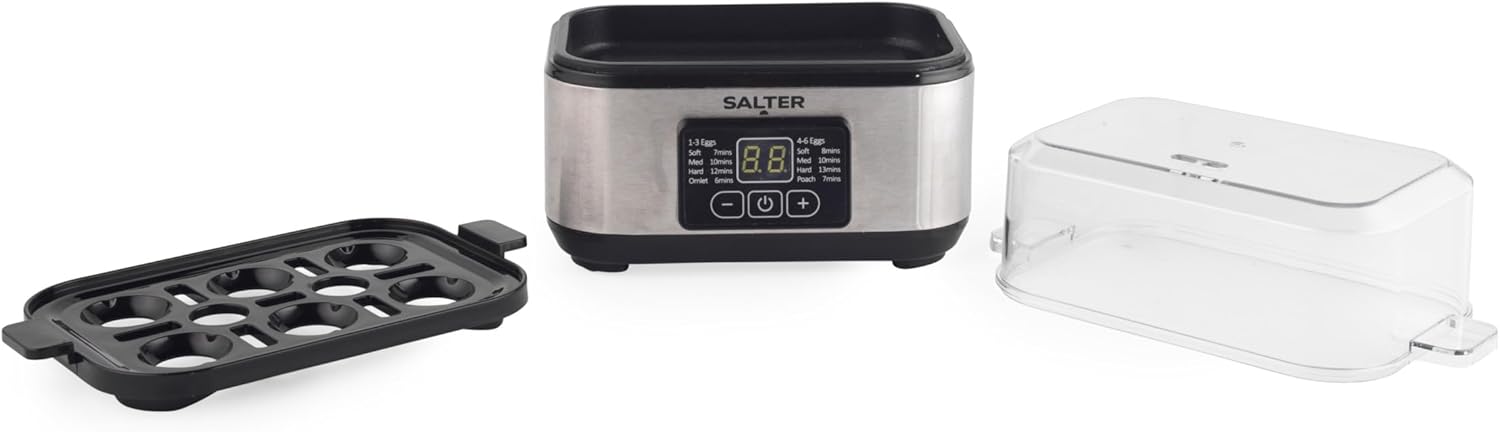
- Chigawo Chachikulu: The base containing the heating element and control panel.
- Nguluwe Yagg: Imasunga mazira okwana 8 kuti iphike.
- Poaching Trays (2x): For preparing poached eggs.
- Kuyeza Cup: Used to add the correct amount of water. Features a piercing pin at the bottom.
- Chivundikiro Chowonekera: Zimaphimba malo ophikira panthawi yogwira ntchito.
Khazikitsa
- Chotsani: Chotsani mosamala zigawo zonse zapakhomo.
- Kuyeretsa Koyamba: Before first use, wash the egg tray, poaching trays, measuring cup, and lid in warm, soapy water. Rinse thoroughly and dry. Wipe the main unit with a damp nsalu. Osamiza gawo lalikulu m'madzi.
- Kuyika: Place the main unit on a flat, stable, heat-resistant surface, ensuring adequate ventilation around the appliance.

Malangizo Ogwiritsira Ntchito
General Egg Boiling (Soft, Medium, Hard)
- Using the piercing pin on the bottom of the measuring cup, carefully pierce the large end of each egg. This helps prevent cracking during cooking.
- Fill the measuring cup with cold water according to the desired egg consistency and number of eggs. Refer to the markings on the measuring cup or the guide on the appliance.
- Pour the measured water into the heating plate of the main unit.
- Place the egg tray onto the main unit. Place the pierced eggs into the egg tray.
- Cover the unit with the transparent lid.
- Lumikizani chipangizocho mu socket yoyenera.
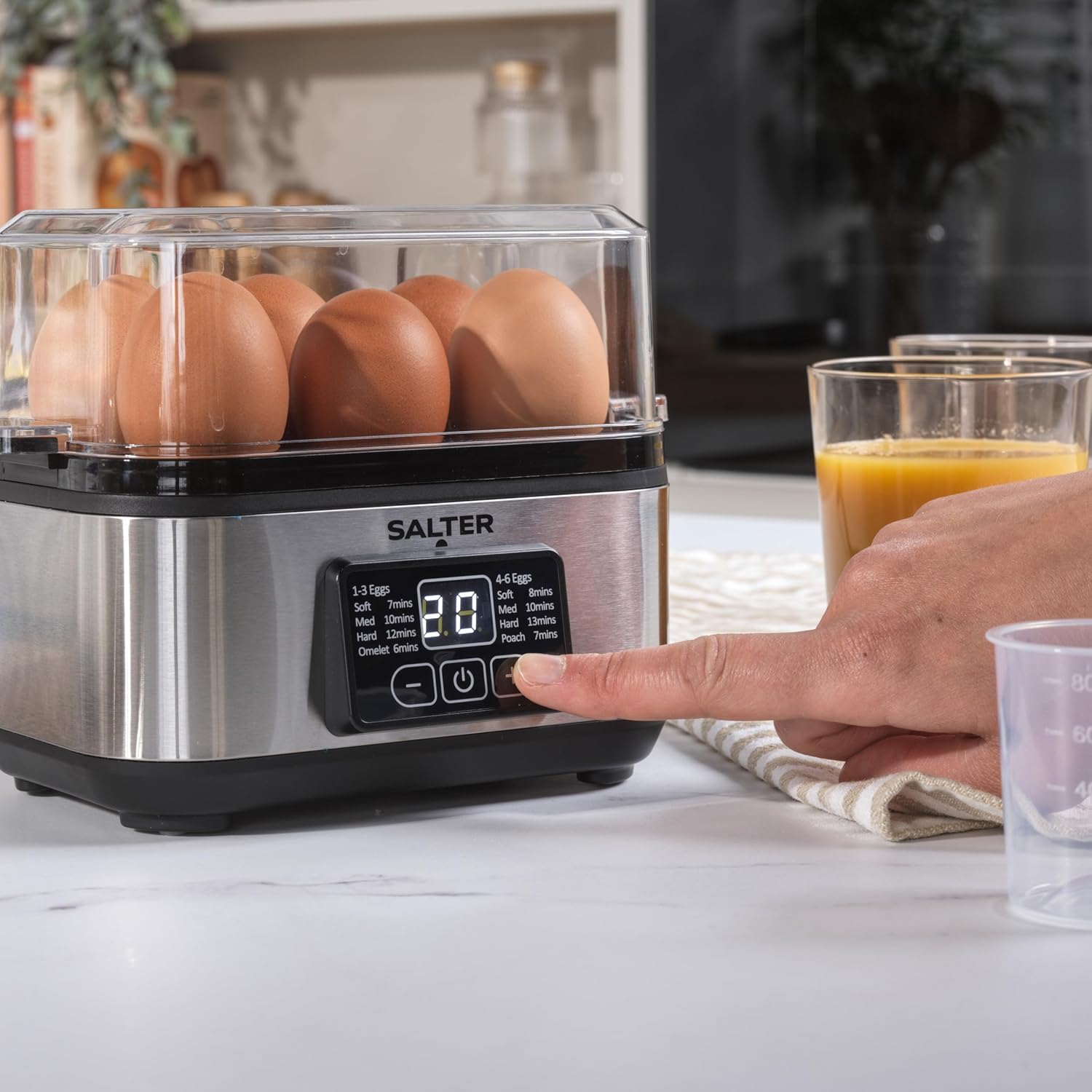
- Dinani batani lamagetsi (U) to turn on the cooker. Use the '+' and '-' buttons to select the desired cooking time based on the number of eggs and preferred doneness. The display shows recommended times:
- 1-3 Eggs: Soft (approx. 7 mins), Medium (approx. 10 mins), Hard (approx. 12 mins)
- 4-6 Eggs: Soft (approx. 8 mins), Medium (approx. 10 mins), Hard (approx. 13 mins)
- The cooker will automatically start heating. An audible alert will sound when cooking is complete.
- Unplug the appliance. Carefully remove the lid (steam will be hot) and then the egg tray. Immediately rinse the eggs under cold water or place them in an ice bath to stop the cooking process and prevent overcooking.
Mazira Ophwanyidwa
- Fill the measuring cup with cold water up to the 'Poach' mark. Pour this water onto the heating plate.
- Lightly grease the poaching trays with a small amount of oil or butter.
- Crack one egg into each poaching tray.
- Place the egg tray onto the main unit, then place the filled poaching trays into the egg tray.
- Cover the unit with the transparent lid.
- Lumikizani chipangizocho mu socket yoyenera.
- Dinani batani lamagetsi (U) and select the 'Poach' setting (approx. 7 minutes).
- The cooker will automatically start heating. An audible alert will sound when cooking is complete.
- Unplug the appliance. Carefully remove the lid and then the poaching trays. Use a non-metallic utensil to gently remove the poached eggs.

Omelets
- Fill the measuring cup with cold water up to the 'Omelet' mark. Pour this water onto the heating plate.
- Lightly grease the poaching trays.
- Whisk 1-2 eggs per poaching tray with a pinch of salt and pepper. Pour the mixture into the poaching trays.
- Place the egg tray onto the main unit, then place the filled poaching trays into the egg tray.
- Cover the unit with the transparent lid.
- Lumikizani chipangizocho mu socket yoyenera.
- Dinani batani lamagetsi (U) and select the 'Omelet' setting (approx. 6 minutes).
- The cooker will automatically start heating. An audible alert will sound when cooking is complete.
- Unplug the appliance. Carefully remove the lid and then the poaching trays. Use a non-metallic utensil to gently remove the omelets.
Kuyeretsa ndi Kusamalira
Regular cleaning ensures optimal performance and extends the life of your egg cooker.
- Nthawi zonse chotsani the appliance from the mains socket and allow it to cool completely before cleaning.
- Zigawo Zochotseka: The egg tray, poaching trays, measuring cup, and lid can be washed in warm, soapy water. Rinse thoroughly and dry completely before storing or next use. These parts are generally dishwasher safe, but hand washing is recommended for longevity.
- Chigawo Chachikulu: Pukutani kunja kwa gawo lalikulu ndi chofewa, damp nsalu. Musagwiritse ntchito zotsukira zowawasa kapena zotsukira. Musaviike chipangizo chachikulu m'madzi kapena madzi ena aliwonse.
- Chipinda Chotenthetsera: Mineral deposits (limescale) may accumulate on the heating plate after use. To remove, pour a small amount of white vinegar onto the heating plate and let it sit for 5-10 minutes. Gently scrub with a non-abrasive sponge or cloth, then wipe clean with a damp cloth. Rinse the heating plate by wiping with a clean, damp cloth several times. Ensure all vinegar residue is removed.
- Posungira: Ensure all parts are clean and dry before storing. Store the egg cooker in a cool, dry place.
Kusaka zolakwika
| Vuto | Chifukwa Chotheka | Yankho |
|---|---|---|
| Eggs are not cooked to desired consistency. | Incorrect water level or cooking time selected. | Ensure the correct amount of water is used for the desired doneness and number of eggs. Adjust cooking time slightly for personal preference. |
| Eggs crack during cooking. | Eggs not pierced, or cold eggs placed directly into hot water. | Always pierce the large end of each egg with the pin on the measuring cup before cooking. Use room temperature eggs if possible, or add a tiny pinch of salt to the water. |
| Chipangizo sichiyatsa. | Not plugged in, or power outlet issue. | Onetsetsani kuti chipangizochi chalumikizidwa bwino mu soketi yamagetsi yogwira ntchito. Yang'anani chodulira magetsi. |
| White residue on heating plate. | Limescale buildup from water. | Descale the heating plate using white vinegar as described in the 'Cleaning and Maintenance' section. |
Zofotokozera
| Mbali | Tsatanetsatane |
|---|---|
| Nambala ya Model | EK6213 (also referred to as EK6153VDE) |
| Mtundu | Mchere |
| Mphamvu | 500W (430W as per some specifications) |
| Mphamvu | Mpaka 8 mazira |
| Zakuthupi | Aluminum (heating plate), Plastic (body, lid, trays) |
| Mtundu | Siliva |
| Makulidwe (L x W x H) | Pafupifupi. 21cm x 13.1cm x 15.5cm |
| Kulemera | Approx. 1 kg (900 grams) |
Chitsimikizo ndi Thandizo
This product comes with a manufacturer's warranty. For detailed warranty information, please refer to the warranty card included with your purchase or visit the official Salter website. For technical support, spare parts, or any other inquiries, please contact Salter customer service through their official channels.
Chonde sungani umboni wanu wogula pazolinga zilizonse za chitsimikizo.


