Mawu Oyamba
The Squier Sonic Stratocaster HT H is an electric guitar designed to provide an inspiring playing experience. This model features a slim and comfortable "C"-shaped neck profile and a lightweight body, ensuring ease of play. It is equipped with a Squier humbucking (H) bridge pickup, delivering a substantial, high-output tone suitable for various musical styles. Additional features include a 6-saddle hardtail bridge for stable intonation and sealed-gear tuning machines for accurate tuning.

Patsogolo view of the Squier Sonic Stratocaster HT H electric guitar in black, showcasing its classic Stratocaster body shape, black pickguard, and humbucking bridge pickup.
Khazikitsa
1. Kutsegula ndi Kuyendera Koyamba
Carefully remove the guitar from its packaging. Inspect the instrument for any visible damage. Ensure all components, such as the bridge saddles and tuning machines, are securely in place.
2. Kusintha Gitala
The Squier Sonic Stratocaster HT H is equipped with sealed-gear tuning machines for smooth and accurate tuning. Use an electronic tuner to tune each string to its standard pitch (E-A-D-G-B-e, from thickest to thinnest). Turn the tuning pegs slowly to achieve precise tuning.

Close-up of the guitar's headstock, featuring the Squier logo, Stratocaster branding, and the six sealed-gear tuning machines.
3. Kulumikizana ndi Ampwotsatsa
To hear your electric guitar, connect it to an amplifier using a standard 1/4-inch instrument cable. Insert one end of the cable into the guitar's output jack (located on the lower bout) and the other end into the input jack of your ampmpulumutsi. Onetsetsani kuti amplifier's volume is set to a low level before playing.
4. Stringing the Guitar
When replacing strings, use light gauge nickel strings (typically .009-.042 or .010-.046). Thread the new string through the appropriate hole in the hardtail bridge, pull it taut over the saddle, and wind it around the tuning post. Ensure a few wraps around the post for tuning stability.
Kugwiritsa Ntchito Gitala
1. Amalamulira Bwinoview
- Buku Knob: Imalamulira kuchuluka kwa gitala yonse yotulutsa. Tembenuzani mozungulira wotchi kuti muwonjezere voliyumu, mozungulira wotchi kuti muchepetse.
- Tone Knob: Adjusts the treble frequencies. Turning clockwise brightens the sound, while turning counter-clockwise mellows it.
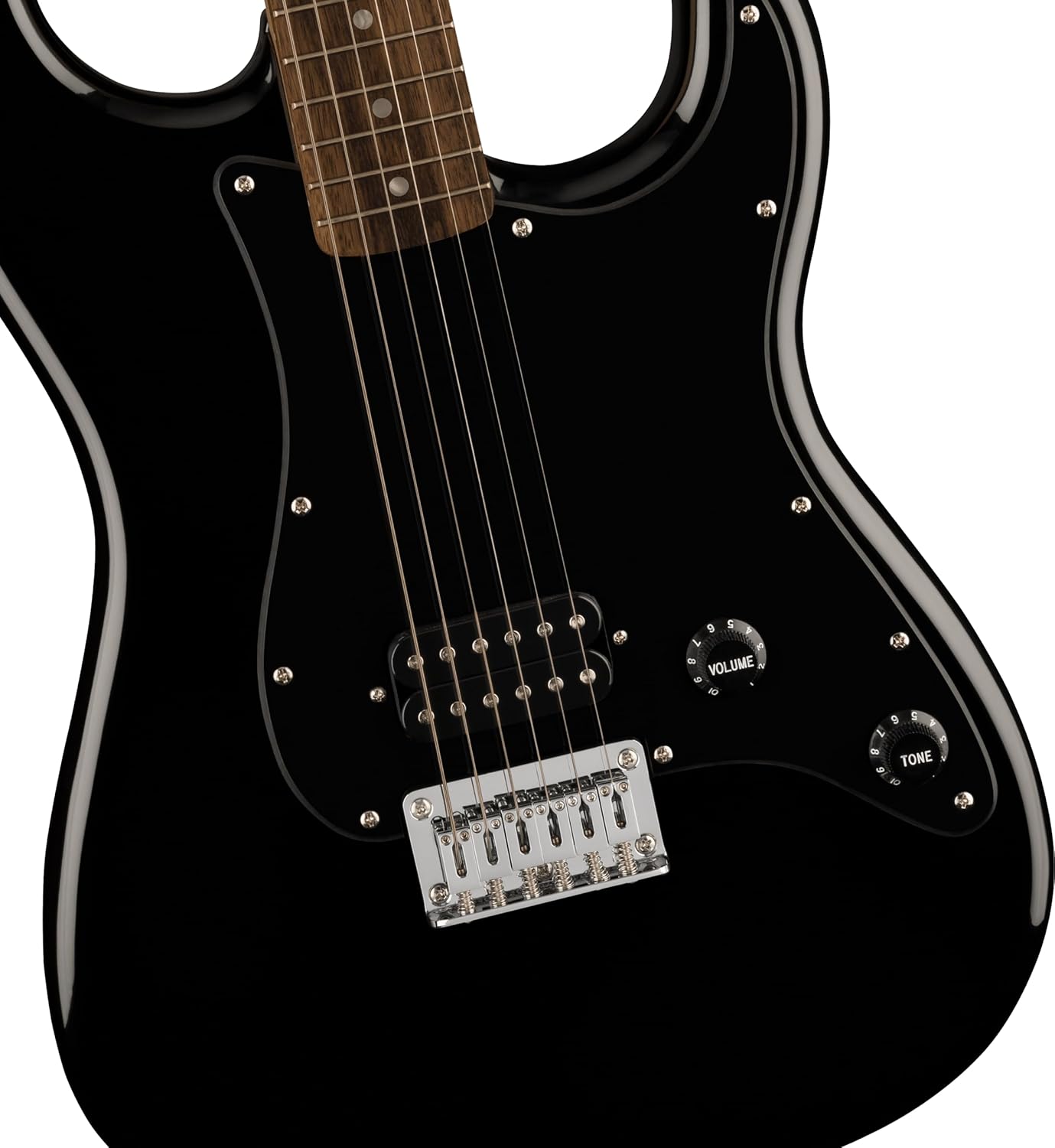
Tsatanetsatane view of the guitar's bridge area, highlighting the 6-saddle hardtail bridge, the humbucking bridge pickup, and the volume and tone control knobs.
2. Humbucking Bridge Pickup
This guitar features a single humbucking pickup in the bridge position. This pickup is designed to deliver a powerful, high-output tone with reduced hum, making it ideal for rock, metal, and other genres requiring a strong, articulate sound.
Kusamalira
1. Cleaning the Guitar
- Thupi: Wipe the body with a soft, lint-free cloth after each use to remove sweat and fingerprints. For deeper cleaning, use a guitar-specific polish.
- Neck and Fretboard: The laurel wood fretboard can be cleaned with a damp cloth. Periodically, use a fretboard conditioner to prevent drying.
- Zingwe: Wipe strings with a clean cloth after playing to extend their life and maintain tone.
2. Kusintha Zingwe
Replace strings regularly, typically every 1-3 months depending on playing frequency, to maintain optimal tone and playability. Always replace one string at a time to maintain neck tension.
3. Hardware Care
The durable chrome-plated hardware can be cleaned with a soft, dry cloth. Avoid abrasive cleaners that may damage the finish.
4. Kusungirako
Store the guitar in a stable environment, away from extreme temperature changes and humidity fluctuations, to prevent damage to the wood and finish. A guitar case or gig bag is recommended for protection.
Kusaka zolakwika
1. No Sound from Ampwotsatsa
- Check that the instrument cable is securely plugged into both the guitar and the ampwopititsa patsogolo ntchito.
- Onetsetsani kuti amplifier imayatsidwa ndipo voliyumu yake imakwezedwa.
- Verify the guitar's volume knob is not turned all the way down.
- Yesani ndi chingwe china kapena ampngati n'kotheka kuti vutoli lithe kuthetsedwa.
2. Buzzing Strings
- Ensure strings are properly seated in the bridge saddles and nut.
- Check for proper fret technique; ensure fingers are pressing firmly behind the fret.
- String height (action) may need adjustment. This is typically a job for an experienced technician.
3. Tuning Instability
- Onetsetsani kuti zingwe zatambasulidwa bwino mutakhazikitsa.
- Check that tuning machine screws are tight.
- Environmental changes (temperature/humidity) can affect tuning stability.
Zofotokozera
| Nambala ya Model | 0373301506 |
| Kulemera kwa chinthu | 9.92 mapaundi |
| Miyeso Yazinthu | 44.9 x 15 x 3.9 mainchesi |
| Zofunika Zathupi | Popula |
| Neck Material Type | Mapulo |
| Zinthu za Fretboard | Laurel Wood |
| Kutalika kwa Sikelo | 25.5 inchi |
| Nambala ya Zingwe | 6 |
| Kusintha kwa Guitar Pickup | H (Humbucking bridge pickup) |
| Guitar Bridge System | Mchira Wolimba |
| Zingwe Zofunika | Nickel |
| Kuwongolera Kwamanja | Kulondola |
| Mtundu | Black (HT H Bridge and Pickups) |
Chidziwitso cha Chitsimikizo
Fender warrants this product to be free from defects in materials and workmanship for two (2) years from the original date of purchase. This limited warranty covers parts and labor for repairs performed by an authorized Fender service center. Please retain your proof of purchase for warranty claims.
Thandizo ndi Zothandizira
For additional support, product registration, or to explore more Fender products, please visit the official Fender website or the Fender Store on Amazon:
- Fender Store: Visit the Fender Store
- Fender Play: This guitar includes a 30-day free subscription to Fender Play, offering thousands of instructional videos to help you learn and improve your guitar skills.


